

Many learning platforms are designed around efficiency, scale and outcomes. But curiosity doesn’t work that way. This piece explores what gets lost when learning is reduced to completion rates and credentials — and what might replace it.
Curiosity is often praised as a virtue in learning. We talk about it as something to encourage, something to protect, something that fuels growth. And yet, many learning platforms are quietly designed in ways that suppress it.
They prioritise efficiency, scale, and outcomes. They optimise for completion rates, credentials, and clearly defined pathways. On paper, this looks like progress. In practice, it often leaves curious learners feeling constrained, rushed, or disengaged.
Curiosity doesn’t work that way.
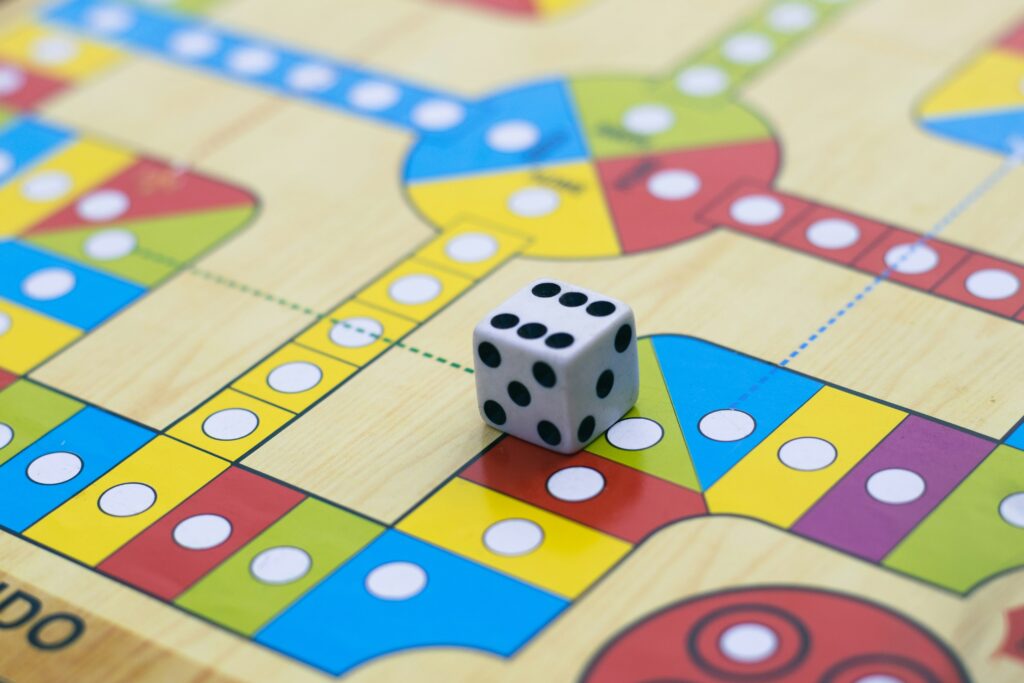
Curiosity doesn’t follow straight lines
Curiosity is non-linear by nature. It jumps ahead. It loops back. It lingers on unexpected details. It follows questions before answers are clear.
Most learning platforms, however, are built around the assumption that learning should be orderly and predictable. Content is broken into neat modules, sequenced into fixed pathways, and measured through completion. Learners are encouraged to keep moving — forward, always forward — regardless of whether their curiosity has caught up.
What gets lost is the freedom to explore sideways. To pause. To follow an interesting thread simply because it’s interesting.
Curious learners don’t want to be rushed through content. They want to understand it.
When learning becomes a transaction
When platforms reduce learning to outcomes and credentials, curiosity is often replaced by compliance. Learners focus on what’s required rather than what’s intriguing. Motivation shifts from intrinsic (“I want to know this”) to external (“I need to finish this”).
The result is learning that may be efficient, but rarely transformative.
Curiosity thrives when learners feel safe to wonder, question, and experiment — not when they’re being steered towards predefined endpoints. It needs space, not pressure.
Designing for curiosity is a deliberate choice
Supporting curiosity isn’t accidental. It requires intentional design decisions — many of which run counter to conventional learning optimisation.
At Disceray, curiosity is treated as a core design principle.
That shows up in small but meaningful ways. Subtle visual cues guide learners without overwhelming them. Interfaces are designed to be calm, intuitive, and accessible, reducing cognitive load and supporting immersion rather than distraction.
Text is kept crisp and focused, paired with visuals that intrigue rather than explain everything outright. The aim isn’t to answer every question immediately, but to invite learners to lean in.
Thought-provoking questions are used not as tests, but as prompts — encouraging learners to reflect on their own experiences and make personal connections to what they’re learning.

The role of storytelling
Storytelling plays a central role in sustaining curiosity.
Stories create context. They give meaning to abstract ideas. They allow learners to see how knowledge connects to real life — not just intellectually, but emotionally.
We remember stories because they mirror how we think and make sense of the world. They hook us, hold our attention, and stay with us long after the lesson ends. Think back to a teacher who left a lasting impression — chances are, it wasn’t because of perfectly structured slides, but because of the stories they told.
By structuring content around narrative arcs, learning becomes more immersive. Cliffhangers invite learners to return. Tension and resolution help ideas stick. Theory is linked to practice, complexity becomes more approachable, and reflection is encouraged naturally rather than forced.
Storytelling doesn’t simplify learning — it makes it human.
Curiosity as fuel for deeper learning
When curiosity is supported, learning changes qualitatively.
Learners are more intrinsically motivated. They retain knowledge more effectively. They’re more likely to think laterally, connect ideas across disciplines, and apply what they’ve learnt in new contexts.
Curiosity also creates resilience. Curious learners don’t disengage when things get difficult — they get interested. They see challenge as an invitation, not a barrier.
This is the kind of learning most platforms struggle to support, because it’s harder to standardise and slower to measure. But it’s also the kind that lasts.
What might replace efficiency-driven learning
The answer isn’t chaos or the removal of structure. It’s a shift in emphasis.
Instead of designing learning as a conveyor belt, we can design it as a landscape — one that learners navigate according to their interests, questions, and needs in the moment.
Instead of optimising for speed, we can optimise for meaning.
Instead of enforcing paths, we can surface possibilities.
Instead of treating curiosity as a nice-to-have, we can design for it.
That’s the direction Disceray is exploring.
Not because curiosity is fashionable — but because without it, learning becomes something to get through, rather than something to grow into.